
Beyond migration stories: where are the women?
Homelore founder Riddhi Varma on reimagining how we value craft, culture, and belonging
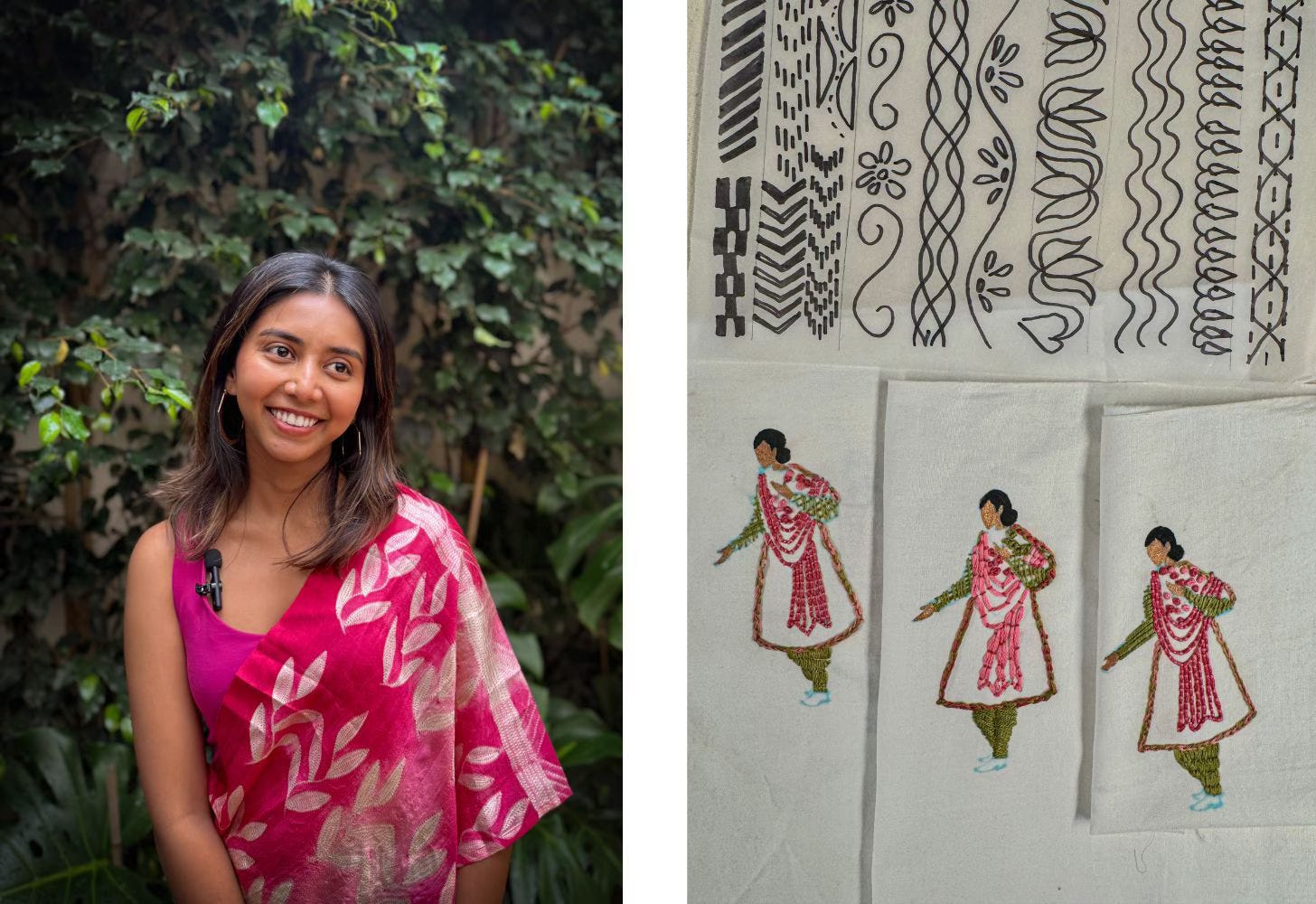
Homelore founder Riddhi Varma and embroidered ‘sketches’ by the Homelore community
Riddhi Varma is the founder of Homelore – a women-led collective blending ancestral craft with contemporary narratives to evolve traditional knowledge and celebrate the artistry of diaspora communities. Using textile experiments, Homelore develops a visual language that honours the centuries-old cultural exchanges between territories. The practice centers on collaboration, bringing female diasporic artisans together to create works that weave together personal narratives, shared histories, and the vibrant textures of life in a globalized world.
Riddhi is a creative strategist and urban researcher who works with questions of inclusion and exclusion. Trained as an architect from CEPT University in India and Politecnico di Milano in Italy – Riddhi locates her work at the intersection of co-creation, social theory, decolonisation and feminism. She is passionate about creating spaces and narratives that amplify overlooked voices and challenge dominant paradigms, fostering a more inclusive and equitable future. Riddhi is currently a DESIS Lab Fellow.
What first drew you to create Homelore?
When I moved to Lisbon, everyone was talking about migration, but I had a nagging question: Where are the women in this story? I saw a real gap between the chatter and the reality. So, with my background in design, I decided to stop wondering and start testing the idea myself. Homelore began as a simple workshop, rather than a definitive business, a way to literally make space for migrant women to be seen and heard.
We notice you prefer the word ‘diasporas’ over’ migrant’. We’re keen to learn more about your perspective on this.
As I started pitching the project for exhibitions and other places, I realised that people would only focus on the part of 'migrants' rather than the craft or research we are creating. I found that the word 'migrant' made people immediately jump to ideas of charity or crisis. Switching to 'diasporas' was a strategic choice. It shifts the focus to culture, community, and shared identity. It just fits the creative, strengths-based business we're actually building.
How has the Homelore journey played out?
It’s been this incredible journey of learning by doing. We've taken a really agile approach, trying things out in everything from pop-up exhibitions to community partnerships. Not every experiment has been a home run, of course, but each one taught us something vital. That willingness to iterate is how we've found our people and are building an organisation that's truly resilient.
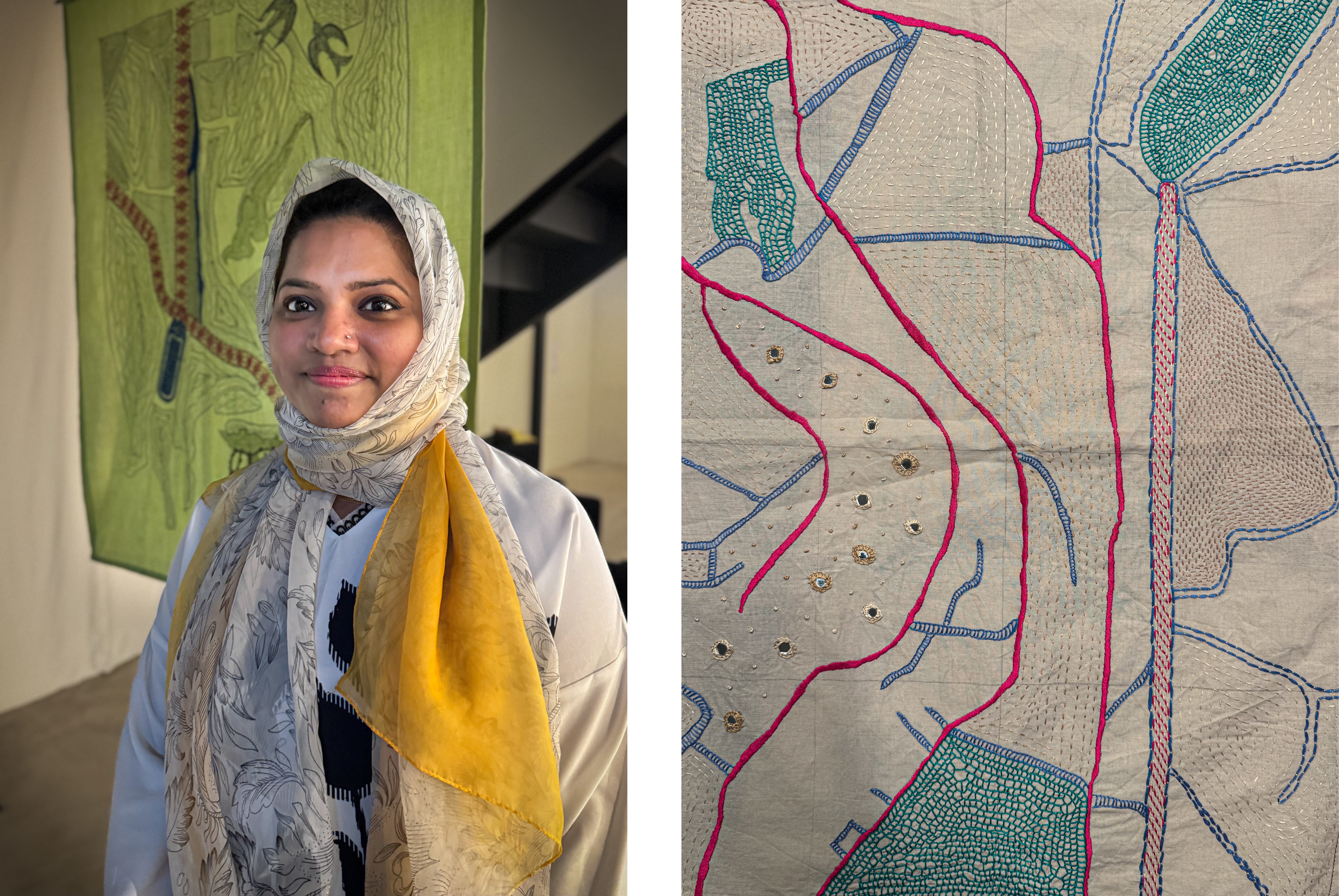
Homelore artisan Sayda Praveen with mapped textile explorations of her neighbourhood
Our exhibition earlier this year was a highlight. Through the warp and weft of traditional techniques, Homelore crafted tapestries that mapped the territories of where participating diasporas now dwell in Lisbon – based on the ancestral echoes of where they began. These stitched cartographies become artifacts of cultural flux, fragile yet enduring monuments to the ceaseless metamorphosis of identity.
How has DESIS Lab – hosted by the ERA Chair in Social Innovation – enhanced your journey?
DESIS Lab was our true launchpad. I honestly don't know if I'd be here without them. The initial funding was huge, but even more than that, it was the belief – especially from Anne-Laure Fayard. Having that support during the tough early days gave me the confidence to keep going – providing the safe space we needed to turn a radical idea into a real venture.
Tell us about what you have found challenging and surprising.
I have found working in the impact sector and co-creating in Lisbon a challenge because there are not many precedents for business projects with diasporas trying to move away from public funding compared to projects run as non-profits and community-run organizations. Places where I have worked before like India and Brazil, such models are commonplace and social impact businesses are the norm. Portugal does not allow us to register as a hybrid organisation (social impact + business) so this has taken lots of figuring out and strategizing. But the best surprise has been the overwhelming hunger for authentic connection: both from the women in our collective and from our community members across Lisbon and the world.
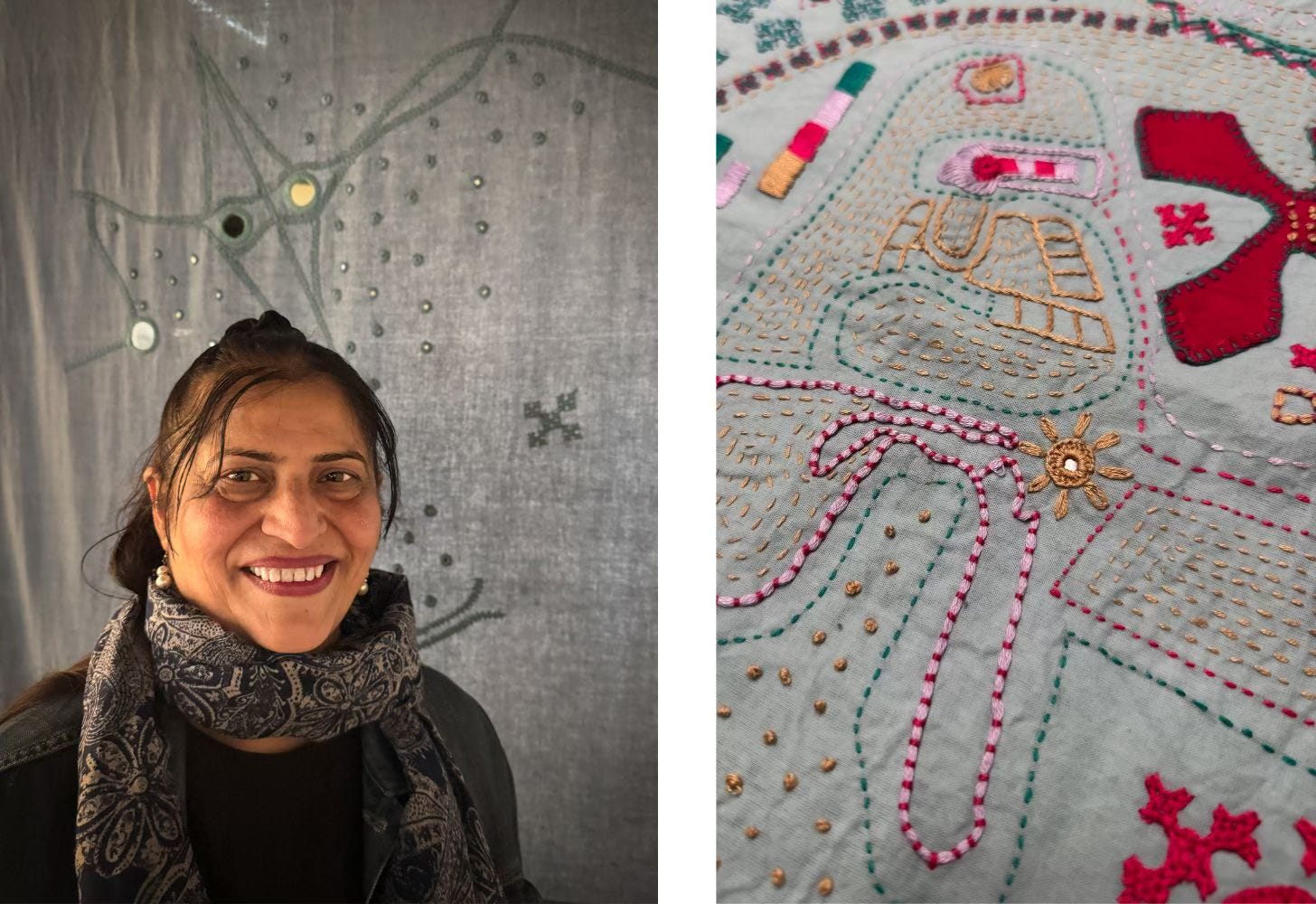
Homelore artisan Shamim Muneer alongside her locally mapped embroideries
What are your future hopes and dreams for Homelore?
Short-term, my big focus is building a strong business model so we can stand on our own two feet, beyond just grants. Long-term, I dream bigger. I want Homelore to be a catalyst for changing how people think about art, craft, and whose stories get to be valued. I'm talking about truly decolonizing the creative industry and changing the perception on the distinction between 'social' and 'regular' business.
What words of advice would you give to someone starting a new social innovation journey involving diasporas?
My advice would be to come in with curiosity, not assumptions, and really let the community's needs and strengths guide you. But also, don't forget the unique skills you bring to the table. The magic happens when you marry deep community insight with your own strategic vision.