
Experts by experience: migrant consultants co-design with students
Three women share their journeys, insights and reflections from working alongside students to imagine new approaches to migration and inclusion
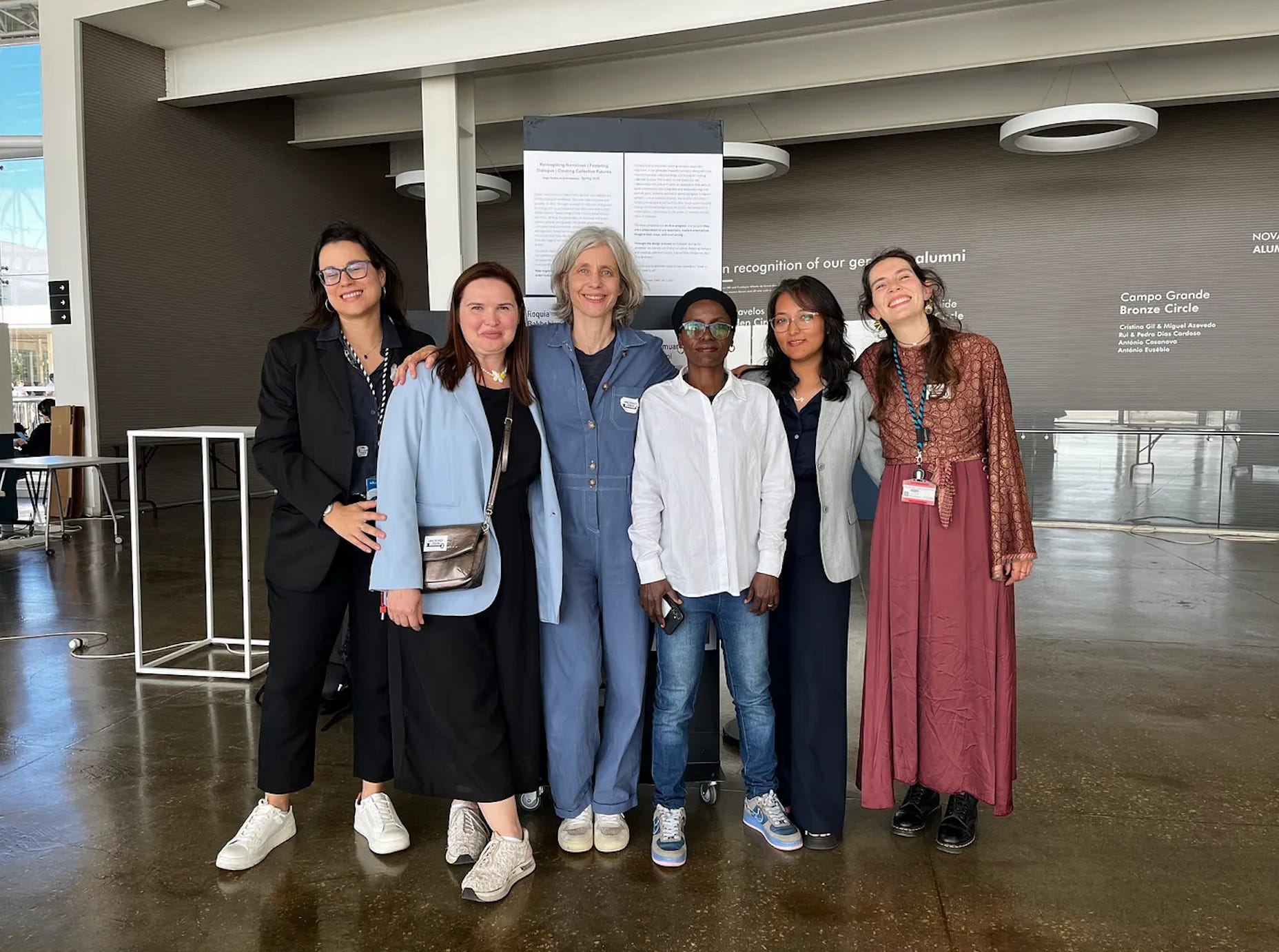
Left to right: Natalia da Luz, Olena Perekhodchenko , Anne-Laure Fayard, Lah Humuani Olawunmi, Roquia Bakhshi, Beatriz Bento
What happens when people with lived experience become co-designers rather than case studies? This spring, in Professor Anne-Laure Fayard’s Design Thinking for Social Innovation course, 30 students from 13 nationalities worked alongside 3 migrant women – not as subjects of study, but as paid consultants bringing invaluable expertise. Unlike typical courses where external experts make brief appearances, the consultants collaborated with students throughout the semester, receiving both payment and a participation certificate from the ERA Chair in Social Innovation. Together the students and consultants explored the question: How might we reimagine narratives about migration in order to foster dialogue and create collective futures? Here, they reflect on the experience and the value of designing with migrants, not for them.
Olena Perekhodchenko is from Ukraine, where she lived in Kyiv before moving to Portugal in 2022 following the start of the war, seeking safety and stability for her child. With a background in project management, EU integration and organisational development, she is motivated by a deep connection to her ancestors, the support she feels from previous generations, and the kindness she sees in others.
Roqia Bakhshi is from Afghanistan and came to Portugal in 2023 through a scholarship to pursue her Master’s degree. With a background in counselling, health psychology and neuropsychology, she is motivated by hope, family, peace and making a difference in the lives of others.
Lah Humuani Olawunmi is from Nigeria and came to Portugal in 2024 seeking educational opportunities and a secure future for her family. A lawyer with over 15 years of experience in the finance industry, she is motivated by setting goals, achieving them and creating positive progress in all areas of her life.
Tell us about your experience participating on the Design Thinking for Social Innovation course
Olena I experienced some difficulty memorising the abbreviation for the course: DT4SI! (Design Thinking For Social Innovation) But seriously – I felt welcomed by the students and, with the support of Anne-Laure and Beatriz, I felt empowered to contribute, learn and use my own experience to advise the student teams throughout their design journeys. My only regret is that those four months flew by in the blink of an eye.
Roquia The course was both challenging and rewarding. As a consultant, I shared my experience with students while learning from them. As a refugee, reflecting on difficult life experiences was sometimes challenging, but it had a practical outcome in that it helped me connect my personal journey as a refugee with social innovation and positive change.
Lah My experience was awesome. In this role I met with students who welcomed me warmly and were ready to share their knowledge and skills. They drew on my knowledge and experience which helped shift their perspectives on immigration. We were learning and unlearning together.
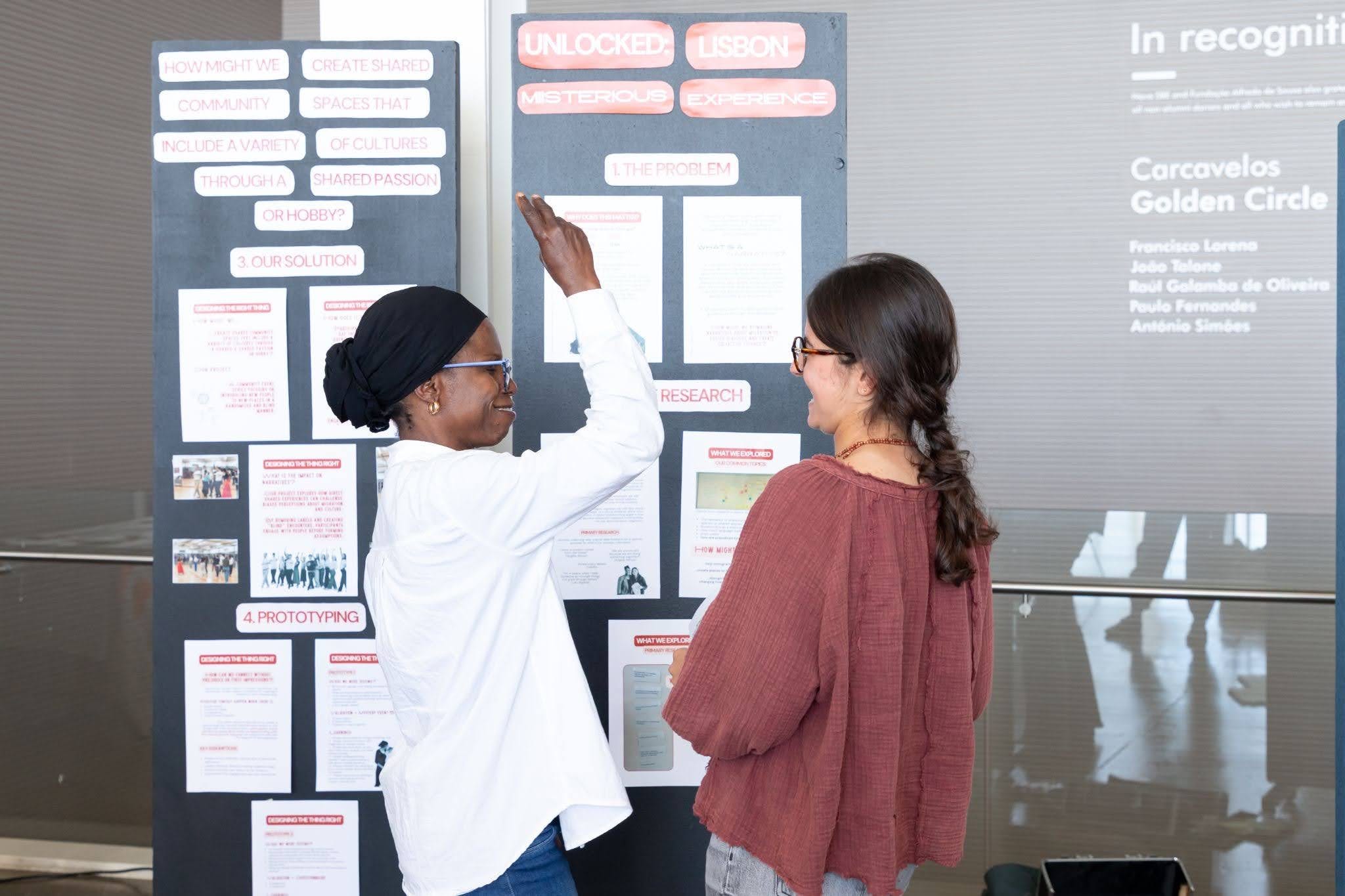
Lah Humuani Olawunmi sharing migrant insights with student
What difference do you think your perspectives made on the student’s projects?
Olena I gather that my story helped students reflect on the perceived distance between ‘us’ and ‘them.’ When you talk to someone who is a migrant or refugee, but who has had a similar education, lifestyle, interests, professional experiences and skills to your own, is there really such a big difference between you and them? I also think for some students that it was an eye-opening and humbling experience that made them reflect on the unpredictability of life.
Roquia My perspective helped students recognize the potential and capacities of people, rather than focusing only on their challenges. It also encouraged them to think about practical, sustainable, and long-term solutions for social issues.
Lah I felt that my lived experience and perspective went a long way in helping students create solutions that went beyond the common and often uninformed narratives that many people have about migrants.
How did being involved make you feel and what did you learn along the way?
Olena Being involved was the most valuable part of the experience because it was exactly what I needed. Rather than observing from the sidelines or only being involved occasionally, I felt part of a collective effort, and I learnt that the journey of creating, designing and prototyping is joyful and valuable in itself.
Roqia I felt empowered, happy, confident, valued, and motivated throughout the experience. I also learned the importance of collaboration and how small actions can contribute to meaningful change.
Lah I learnt a lot through interacting with the students, which changed some of my perceptions about what people think of us as migrants. Over time, it also made me feel more welcome in Portugal than I had before.
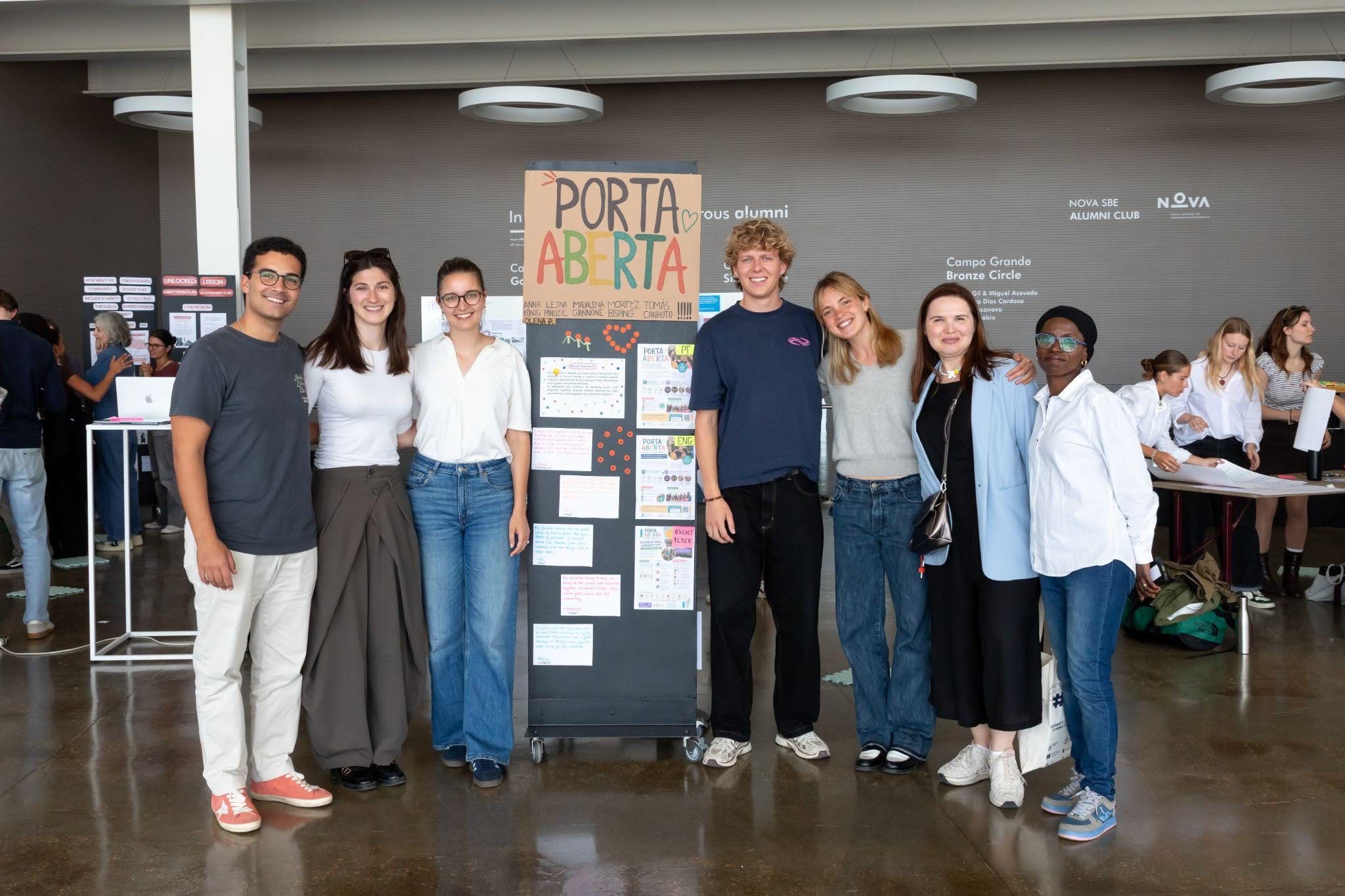
Design Thinking for Social Innovation students and migrant consultants with their project
What are your hopes and dreams for the future of the projects you consulted on?
Olena I wouldn’t expect all the student teams to continue their activities, as transforming these ideas into sustainable social projects would require fundraising, institutional support and ongoing commitment, which can be difficult alongside the demands of studies and exams. My hope is that these projects find “godmothers and godfathers” — NGOs, student bodies, academic groups, socially engaged businesses or individuals — who can provide the support, resources and continuity needed to welcome these ideas into the wider family of migrant support initiatives and help them grow.
Roqia I hope the students continue developing their work beyond the course and that universities, organizations, and NGOs support these projects. I also hope that in the future, they involve more organizations and groups working with refugees to reduce isolation and help apply these ideas in the real world.
Lah I hope the projects will continue and reach migrants who are facing these challenges, so that they can connect, integrate and get their families settled. Knowing how and where to access the necessary support in a timely way is crucial to the integration of migrants into local communities.
What advice would you give to other students and organisations working on challenges faced by migrants and refugees?
Olena I think the most important thing is to change the perspective — not to create projects for migrants, but with them. While implementing projects and organising activities for migrants and refugees is important, involving them in the planning and delivery processes creates more meaningful outcomes in terms of integration, agency and their sense of fulfilment and belonging.
Roqia Working with and for refugees requires a multi-sector approach, as no single organization can address these challenges alone. Collaboration between organizations is essential. It is also important to really listen to refugees — not only focusing on their challenges or weaknesses, but also recognizing their strengths, capacities, and potential.
Lah The advice I would give is to find practical, achievable solutions for each immigrant while treating every case with care and sensitivity. By understanding each person’s background and supporting their growth in their new country, organisations can help people move forward with confidence and find achievable solutions.
Explore how the 2025 course took a similar approach: Innovation through inclusion: migrants and students co-design change