
From thesis to thriving community
Turning ideas into reality and creating projects that keep growing after you leave
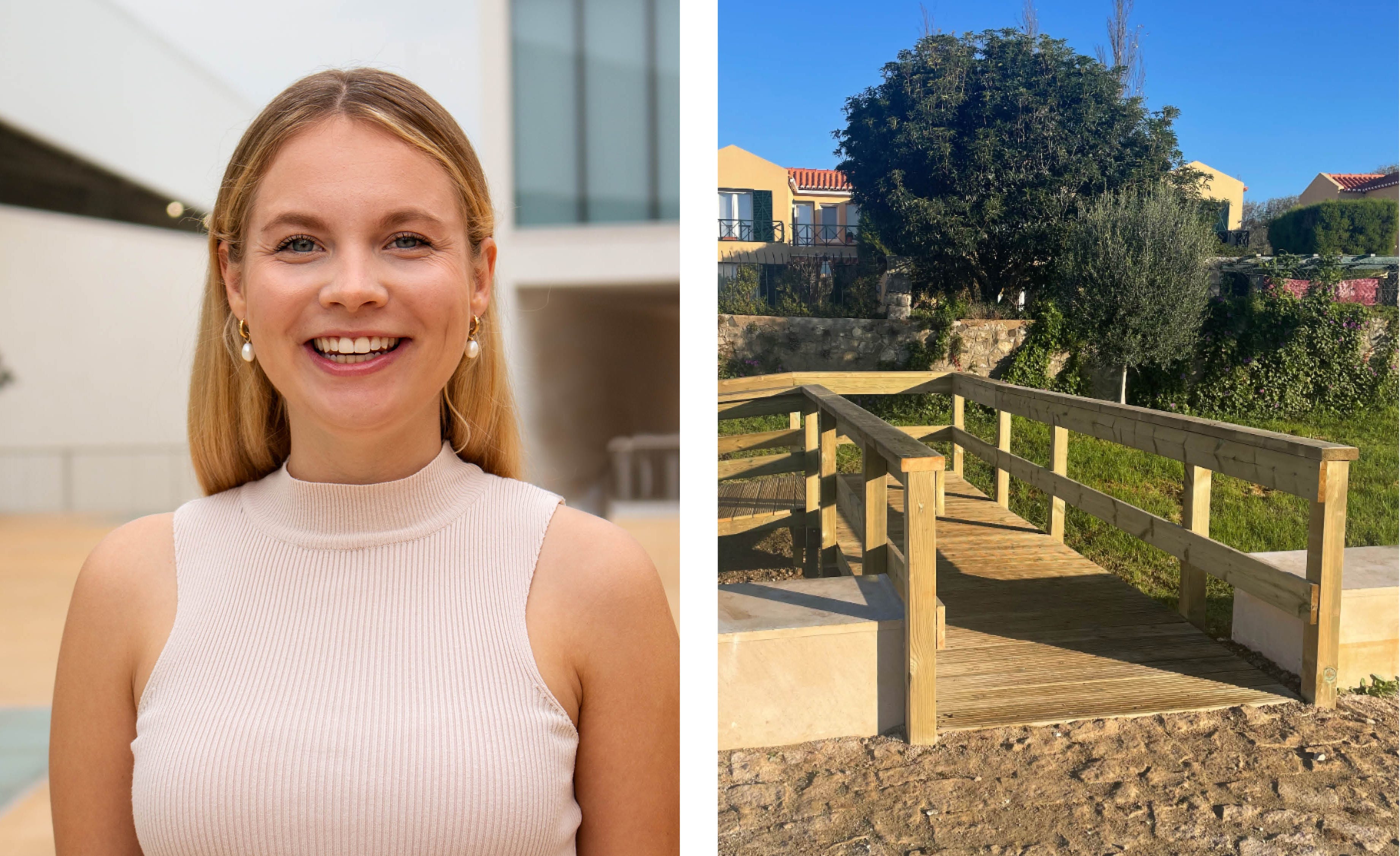
Driven by curiosity and a passion for solving complex challenges, Johanna Pfeffer has built an interdisciplinary path combining business and design. Currently based in Lucerne, she has lived, worked and studied across Europe while exploring how design can create meaningful social and systemic change. Her Master’s thesis at Nova School of Business and Economics led to the creation of our community garden that continues to thrive today — offering a powerful example of how ideas can evolve into lasting, community-led impact. In this conversation, she reflects on the journey behind the project, the realities of creating change and how design has a vital role to play in shaping more sustainable futures.
Tell us about your Master’s and community garden initiative at NOVA
After working in communication design agencies, I felt drawn to explore more of the world and how businesses truly function, leading me to pursue my Master’s in Management at Nova SBE (2022-2023). A turning point came during Anne-Laure Fayard’s Design Thinking for Social Innovation course, which opened my eyes to the power of design to create real world impact beyond aesthetics. The community garden initiative became the perfect application of everything I’d learned — a hands-on Master’s thesis project where I brought together creativity, strategy, and collaboration to create a sustainable space that people actively use today.
What first drew you to pursue this project?
I’ve always been passionate about plants and the role they play in wellbeing and urban life. When Anne-Laure introduced the idea of a community garden at Nova SBE, I felt a strong intrinsic motivation to explore its potential. Although the concept had been discussed for years, it had never been implemented due to a lack of structure, which I saw as an opportunity to turn it into something tangible.
How has the project played out?
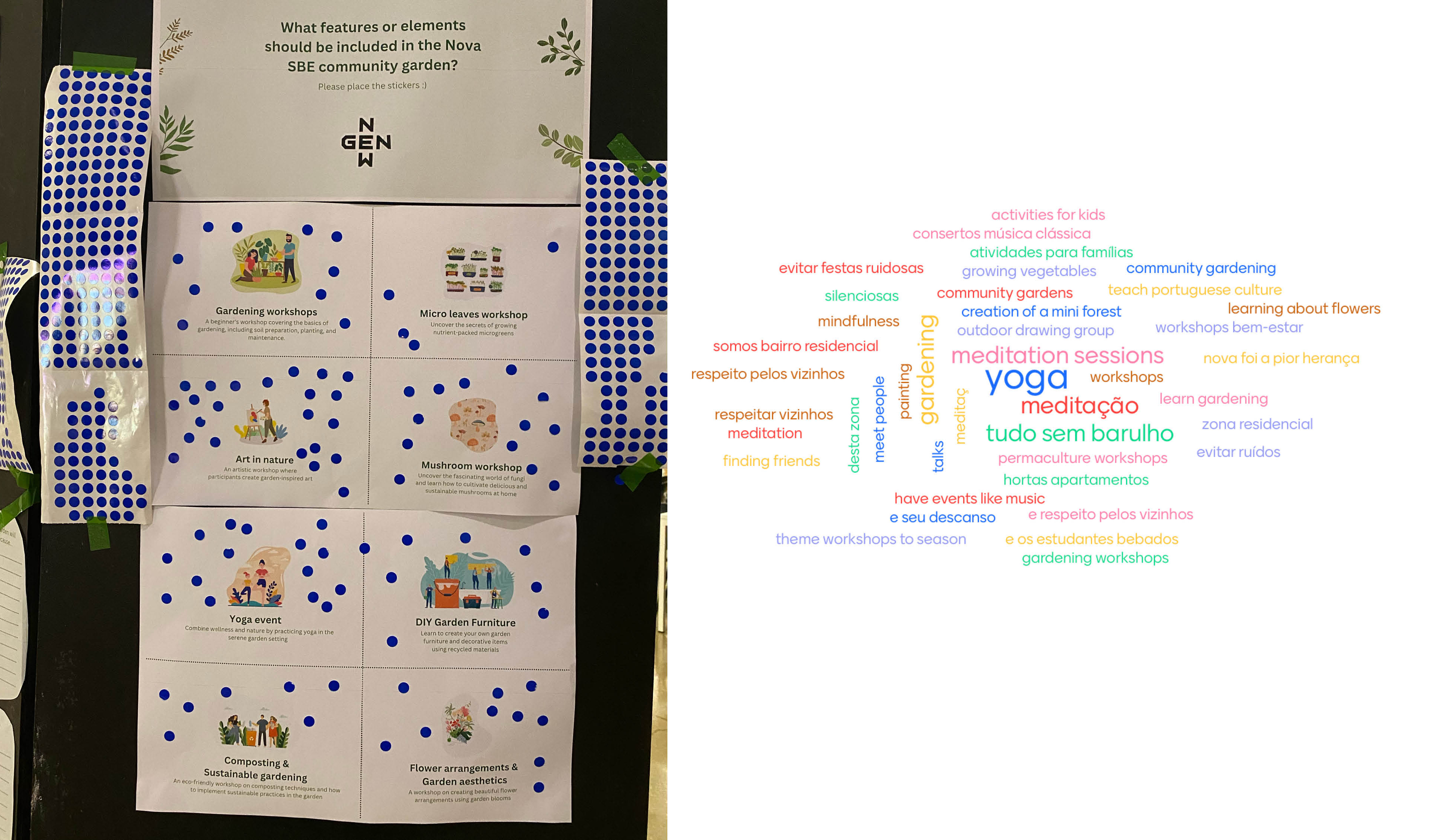
My research confirmed a strong interest in a community garden at Nova SBE, with far more students and local residents eager to participate than I had expected. I initiated the project by running workshops and aligning stakeholders, as well as developing a hybrid governance model comprising ‘guardians’ and an advisory board. I then handed the project over to the DESIS Lab, ensuring that key infrastructure, such as a ramp and water access, was in place by late 2023. Since then, the project has evolved organically through community ownership and trust, with the support of an employed community garden manager. Today, the garden is thriving, with regular workshops, open days, and active guardians, clearly reflecting our original vision of collaborative, tangible impact.
How has DESIS Lab – hosted by the ERA Chair in Social Innovation – enhanced your journey?
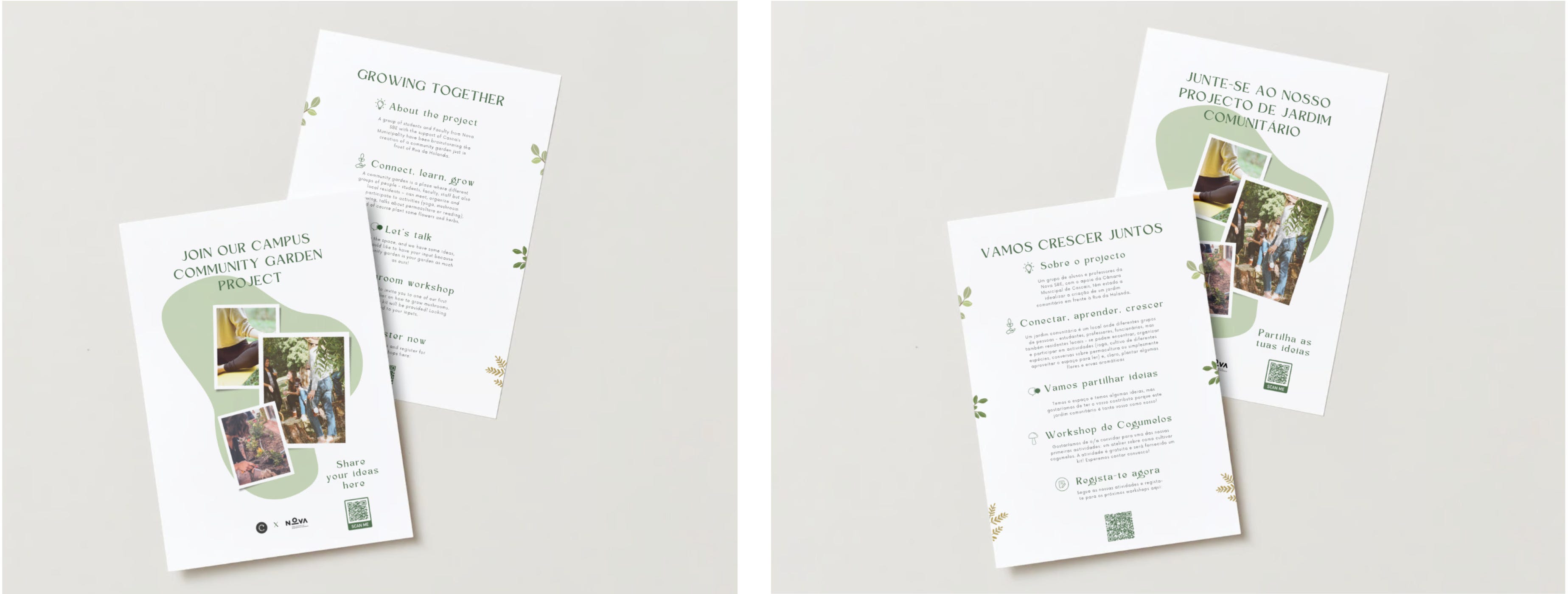
DESIS Lab provided constant support throughout my journey, connecting me with a diverse network of experts and resources that deepened my involvement in social innovation. Their strong commitment to making the community garden a reality came especially through Anne-Laure’s hands-on supervision and Beatriz Bento’s early bridge-building between Nova SBE and the neighborhood. Together, we actively reached out to residents, and Beatriz was a great support in distributing flyers and facilitating communication, particularly by overcoming the Portuguese language barrier. This collaboration not only enriched my thesis with practical knowledge but also showed me how labs like DESIS turn ideas into lasting community impact.
Tell us about what you found successful, surprising and challenging in regards to the garden project
The project was most successful due to strong workshop participation, broad interest in the garden, and meaningful partnerships, ranging from student clubs to Cascais Ambiente, which built the accessibility ramp by late 2023. I was particularly surprised by the consistently high level of engagement, which exceeded my expectations in a business school context. In my thesis, I identified managing conflicting stakeholder interests, unstructured communication, and uncertainty around long-term governance as key challenges. As my time at Nova came to an end, I also had to step back from the project, which meant letting go without full control over its future — which was both challenging and a valuable learning experience.
What are you doing now?
Over the past two years, I have been tackling energy transition challenges through my Master’s in Service Design at HSLU in Lucerne. From a design perspective, I have explored how design can address the complex challenges of infrastructure and sustainability systems. At the same time, my sister and I are taking over our family business, which provides services for transformer stations that are essential for the energy transition. We are expanding our service portfolio, contributing directly to the critical infrastructure needed for a sustainable energy future.
What are your hopes and dreams for the future?
I hope that design will be understood not only as an aesthetic discipline, but as a key driver of meaningful change in projects, outcomes, and society. In the future, I want to help strengthen the role of design in addressing complex, systemic challenges. Professionally, I’m excited to contribute to the energy transition through our family business, ensuring essential infrastructure like smart transformer stations enables sustainability at scale. My dream role bridges technical complexity and real world needs, working with diverse stakeholders to discuss the energy future.
What words of advice would you give to those starting a new social innovation venture?
Start by testing your ideas early and often and make use of school programs like the Prototyping Fund as well as networks of like-minded people who share your drive. Let go of perfectionism, as it can block experimentation and slow down momentum. If an idea gains traction, build a solid foundation and develop it with patience. Community impact takes time, and meaningful growth needs space to unfold. Above all, remember that it’s not about your own ideas, but about responding to real community needs — even if that means gently letting go of concepts you are personally attached to.